Showing posts with label living in Japan. Show all posts

Tuesday, June 11, 2013

Ogawa Machi: Zakkoku Koubou Craft Micro Brewery


There are many things that Japan does well  on a big scale-miso, sushi, sake, tea, to name a few.  But one thing that left both Karl and me disappointed right from the beginning is Japanese beer. 

Having lived in the upper Midwest of the US of A for all of my adult life until moving to Japan, a huge variety of delicious micro brewed beer was always available.  In fact, when we were dating, Karl and I went to one of our favorite haunts on the shores of Lake Superior on a weekly basis-Fitger’s Brewhouse. 

Imagine our disappointment upon moving to Japan when-generally speaking-all we had to choose from was Asahi and Sapporo.  Not terrible…but not great.  Karl loves porters and stouts, while I lean towards weizen brews.  Neither of which could we find, besides the insanely over priced cans of Guinness.  Hmm.

About a year into our living in Japan, we finally ventured into a small establishment that would prove to increase our weekend enjoyment exponentially-Zakkoku Koubou Craft Beer.


The brew master and some of his brewing friends call themselves the "Beer Cats."
Although we had noticed this little place several times before, once again our lack of being able to speak any significant amount of Japanese held us back.  Finally, after mustering some courage, we immersed ourselves further into our Japan experience. 


The phrase that comes to mind when I reflect on this discovery is, “It’s better late than never.”  We were kicking ourselves after we realized what an incredible little micro brewery our little town had had all along.  But…better late than never! 
A young couple runs Zakkoku brewery-a local, organic micro brewery.  They do not speak much English but they are some of the nicest, friendliest people whom we have yet to meet anywhere-Japan or elsewhere. 


Hops!
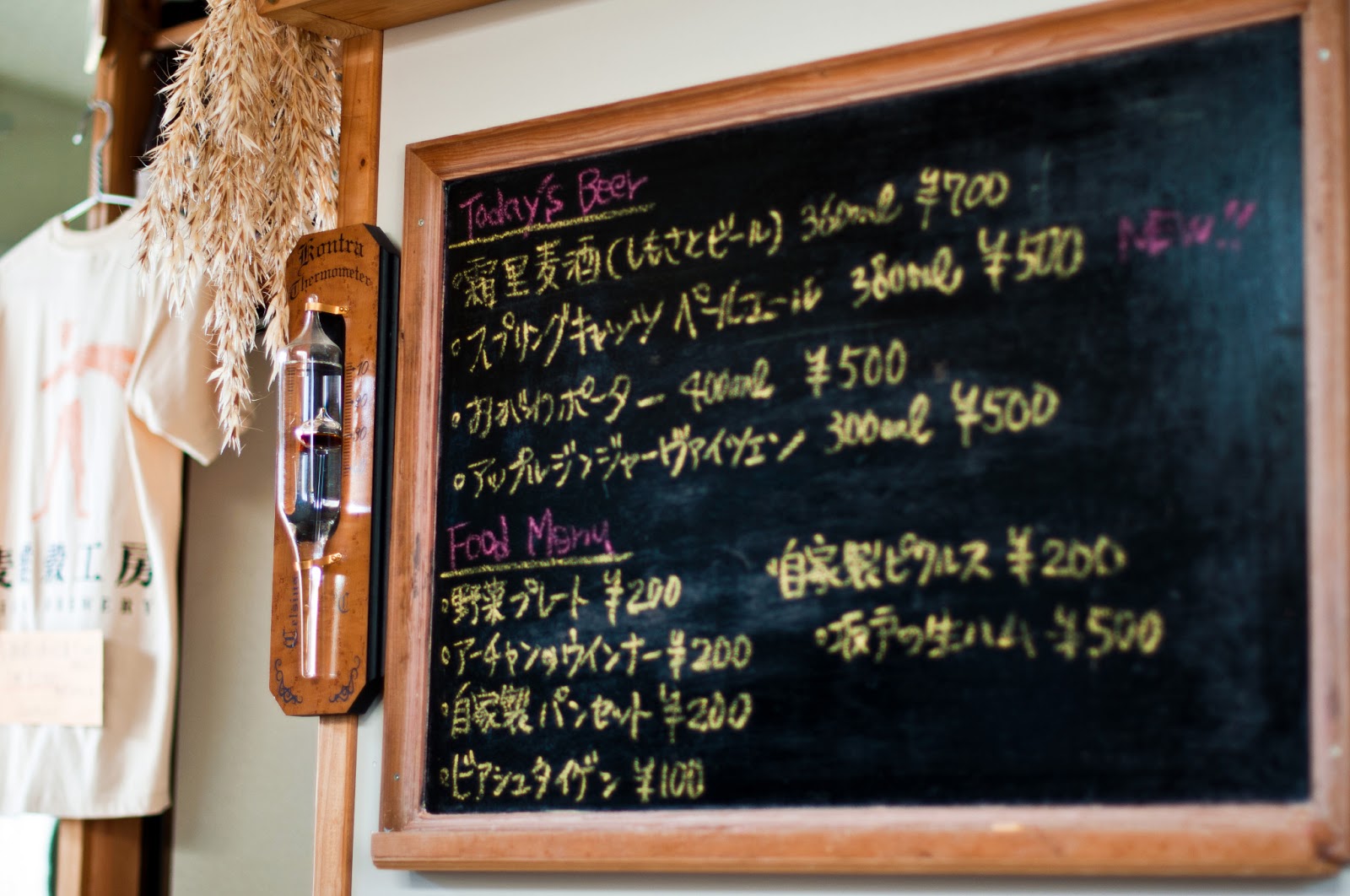
Sitting at the tiny little wooden bar, you can see right through to the other room where the magic happens.  They always have at least four beers on tap: a porter, a weizen, a seasonal pale ale, and a few other seasonal brews.  Karl’s and my brew-filled dreams had come true!

The Ogawa Porter-Karl's favorite.

The Apple Ginger Weizen-my favorite!
Along with the beers, they offer some incredibly delicious snacks.  Spicy sausages from A-chan’s delicatessen just down the street, wholegrain breads, pickles, pretzels, and more.  All of them of are homemade, fresh, and organic.  Occasionally, they also offer full meals.  We have had Japanese style curry and rice there a few times (usually we are not enamored with this dish-but it is extremely delicious at Zakkoku). 

Spicy sausages that are made at Achan's Delicatessen, which is just down the street.
Delicious bread set.  Homemade bread for the win.
This is a small, quiet place that fills up quickly and doesn’t stay open too late.  We usually go on Friday afternoon right after work for a weekend kanpai (Japanese for cheers).  Sometimes, we take a few bottles home with us-though the bottled beers are usually limited to just two or three types of beer. 


Zakkoku micro brewery is located extremely close to the station-less than a minute walk.  We usually start parties here with a brew or three of truly exceptional micro brews and then migrate over to Ota Horumon (less than a minute walk away) for delicious food and good times.  We are going to miss this routine after we leave.  Fortunately home is waiting for us, with all its glorious micro brews to go with it. 


View Larger Map
Pin It!

Wednesday, May 22, 2013

Ogawa Machi: Genki no Ki げんきの木


On a Saturday about a year and a half ago, we had just finished working out at Kawara Sports.  It was midday, and we were ready to replenish our burned energy.  It was then that we first noticed Genki no Ki just across the street.


A tiny little white structure, Genki no Ki looks as quaint as a cottage tucked away in a forest.  We walked in to inquire after the menu.  The lovely lady who owns and runs the place greeted us-in English!  Right away she asked us to call her Ahchan-her actual name is Atsuko.  


On that first visit, Ahchan draw us a little map of other places to visit in Ogawa Machi.  She told us about organic farmers markets, organic restaurants, bakeries, a delicatessen meat shop, and a craft micro brewery.  Our world opened!  We were thrilled to have this new guidance about our town.   
 
Ahchan and her sweet mother are the amazing cooks and bakers at Genki no Ki-an organic café and coffee shop.  They also carry a variety of Fair Trade items for sale as well as local organic produce and small grocery items.  

For the past year, our favorite Saturday routine has been to get in a good long workout and then walk across the street for a healthy organic lunch at Genki no Ki.  Lunch is a set menu of the day.  It is always good.  99% of the time, we order the drink and dessert set to go with lunch.  All of the coffees and teas are delicious.


Almost every time we go, something wonderful happens.  We have met dozens of friendly, interesting people in this tiny café-most of whom speak some English!  We have been pleasantly surprised numerous times with the friends we have made at Genki no Ki.  


If you find yourself in Ogawa around noon, this is a fantastic place for lunch and a cup of tea or coffee.  If you are looking for a relaxing way to spend your afternoon after eating lunch, the onsen Kawara no Yu is just across the street. 


Things to know about Genki no Ki:


The opening hours are midday only: 11 am to 3 pm.  It is a lunch place.  


It is closed on Sundays and Mondays.

Lunch with coffee and dessert runs about 1000 yen-about ten USD. 


Avoid going for a late lunch-lunch sells out quickly!

View Genki no Ki in a larger map
Pin It!

Monday, May 20, 2013

Ogawa Machi: Kawara Sports


Stereotypically, college freshman gain somewhere around fifteen pounds during their first year of university.  This is referred to as “the freshman fifteen.”  This did not happen to me.  However my first year living in Japan is another story… 


During my time in university, I was good at keeping up with daily workouts.  When I moved to Japan, my first job had me working from 2 pm to 10 pm.  Combined with the culture shock, this schedule left me little time or energy to do anything-including exercise. 

Fortunately, I soon found a new job with hours from 8 am to 4 pm and we discovered the local gym.  We had a trial day at the gym, and decided to join. 

Though a small gym, Kawara Sports has a lot to offer.  There is a weight room with free weights as well as machines for lifting and cardio.  There are two studios in which many different types of classes are held everyday.  The lap swimming pool also holds daily classes. 

Although gym memberships are expensive in Japan-ours runs us close to 19,000 yen (combined) a month-we find that it is worth it.  The membership fee covers entrance to as many of the offered classes you care to join.  We have frequented yoga, taichi, and kickboxing classes and have really enjoyed them. 

Along with the membership, you receive two free tickets to the Kawara no Yu onsen that is located just across the street from the gym.  We have found that spending an intense evening at the gym followed by a relaxing bath in the hot spring is an excellent way to relax after working all day. 

Oh, and by the way, I have lost all the weight I gained that first year.

Kawara Sports Club is located very close to Kawara no Yu Onsen, only about a ten minute walk from the station.  Here is a map:


View Larger Map
Pin It!

Thursday, May 16, 2013

Ogawa Machi: 花和楽の湯 Kawara no Yu


If there is anything one can say with certainty regarding the Japanese people, it is that they do things with dedication.  Of all of the cultures I have experienced (however much or little), the Japanese culture-as a whole-wins gold for dedication to hard work. 

The Japanese people are known to be hard workers.  And although I say that they win gold for their work ethic, this can be-and frequently is-taken too far.  The life of the “salary-man” is far too ubiquitous in Japan and is debatably a partial cause for the high suicide rate with which Japan struggles.

Although this sometimes decidedly unhealthy dedication to work is so engrained into the Japanese way of life, this does not mean that they don’t know how to play.   Some of the most intense parties to which I have been are the end of the year parties with my husband’s coworkers.  These people really know how to party.  They will drink you under the table and come back for more.  On weeknights. 

Yikes.  That is all I have to say about that.

Another thing that Japanese people do well is relax.  Their favorite way of relaxing is, of course, the onsen-Japanese hot springs. 

The archipelago we call Japan is ostensibly one huge mountain range that rose volcanically from the ocean thousands of years ago.  Several live volcanoes still can be found all over the islands-including (according to many sources, including National Geographic) the great natural icon of Japan-Mount Fuji.

Arguably the best product resulting from the volcanoes are the hot springs located all over Japan.  In our town of Ogawa Machi, we have a locally famous hot spring called Kawara noYu.

Entrance to Kawara no Yu
Not so many years ago, the building that now houses the onsen was a roof tile factory.  The son who inherited the factory decided to change the business and drill through the bed rock under Ogawa in search of hot spring water.  After investing everything and failing the first few drills, he struck gold in the form of hot water.  A very successful and popular onsen, they now have multiple locations in Saitama.

One of the reasons this onsen is so popular is because of the feel of the water.  Some onsens have a high level of sulfur in the water and besides not smelling so great, can cause your skin to itch.  (I experienced this at the very popular hot spring resort called Kusatsu in Gunma prefecture.)  Kawara no Yu’s water feels very silky on your skin in the best possible way.  There is something about the mineral content of the water that does not dry out your skin-it feels wonderful.

For the full experience at Karawa no Yu, you should also spend some time in the hot stone spa-the ganbanyoku A dimly lit room with soft music and relaxing scents, you receive a wooden head rest and a towel when you enter.  After you have found a location, you lay down on stone floor.  The entire room is heated.  The heat from the hot stones seeps into your bones and feels amazing-especially during winter. 

The hot springs themselves are separated by gender-this is because the Japanese way to experience onsen is in the nude.  However, many people do carry small modesty towels with them between the shower, sauna, and all of the hot spring pools.  After showering, you can either go outside to the assortment of pools which vary in depth and temperature, or stay inside and enjoy the one indoor spring, the sauna, and the cold pool.  Everyone I know usually switches between all of them. 

Kawara no Yu also boasts massage and aroma therapy services, two restaurants and bars, private rooms available for renting, and a big tatami room for reading and taking naps. 

Although entrance to this onsen is a bit on the expensive side, everyone we know who has been there agrees that it is worth it.  If you are a resident of Ogawa and would like to frequent this onsen, I recommend becoming a member of the affiliated gym across the street-Kawara Sports-where along with your membership you receive two free tickets per month to Kawara no Yu.  The tickets only allow one item with entrance-towel set, hot rock room outfit, or yukata (a casual kimono for wearing while dining or relaxing outside of the onsen itself)-we usual bring our own towels and ask for the outfit for the ganbanyoku room. 

Located a short walk from the station, Karawa no Yu is also a great destination for a anyone day tripping to Ogawa Machi. 

Opening hours:  Open from ten am until midnight.  I believe they are open 364 days a year. 

If you are planning on going there during a holiday-especially one that falls on a weekend-be prepared to wait a long time for entrance.  I find that the best times to go for the least amount of people are in the evening during the week.

Here is a map from Ogawa Machi station to the Kawara no Yu entrace.  I am sorry you have to zoom in to see it...I am still an html novice and could not figure out how to correct this just now.


View Ogawa Onsen Kawara no Yu in a larger map
Pin It!

Tuesday, May 7, 2013

Ogawa Machi: Our Japanese Hometown

A hand drawn/painted map of our town-Ogawa Machi.

Nearly three years have passed since my husband, Karl, and I moved to Japan.  At this time three years ago, we knew that we would be moving to Japan, but we were still anxiously awaiting to hear about where we would be living within Japan. 

Only six short weeks before we were scheduled to leave, we finally found out where we would be living during our time in Japan:  Ogawa Machi, Saitama.  Karl would be working in a tiny neighboring village: Higashichichibu Mura. 

As soon as we had this information, we consulted with the all-knowing Google to try and find out a thing or two about our new place of residence.  Unfortunately, we found very little information. 

Because of this experience, I have decided to take it upon myself to document all of our favorite places in Ogawa Machi on this blog.  Though not nearly as exciting as Tokyo (which is a mere hour away by the Tobu Tojo train line) Ogawa is a fantastic place to live. 

Ogawa is, by Japanese standards, a small town.  The population is probably somewhere around 35,000.  It is nestled in a little valley right at the edge of the Chichibu mountain range.  Like most places in Japan, it too boasts a long history. 

Right after the massive 9.0 earth quake that shook Japan on March 11th, 2011, we were reassured many times by the residents of Ogawa that we were living in a safe place.  Ogawa was built directly over an enormous bedrock, so even though we can feel lots of shaking during earth quakes, the buildings are quite sound. 

The weather in Ogawa is, for most of the year, fantastic.  Saitama is rated at the sunniest prefecture in all of Japan.  Since the ground doesn’t freeze, the growing season lasts all year long.  The occasional slushy snow falls in the winter and the summer is horribly humid.  But the spring and the autumn are perfection.  Unless you have allergies, that is.

Over the next few weeks, I will devote posts to several places in Ogawa that we wished we had known about when we first arrived.  For anyone else moving here in the future, I hope that you will find this useful. 

Pin It!

Friday, March 15, 2013

Senso Ji Temple and Asakusa Shrine


If you are coming to Japan for a trip and plan on spending some time in Tokyo, chances are you will find your way to this temple and shrine.

Detail on the side of the Senso Ji.  In case you are wondering, here is a good explanation of the swastika.
Asakusa district is one of the biggest tourist areas in Tokyo.  It is surrounded by outdoors malls full of tourist shops all full of the same souvenirs.  There are also a few nearby shrines, plenty of good restaurants, karaoke bars and even a small amusement park.  

Souvenir shops are still closed in the early morning.
I have been to visit Asakusa Shrine and Sensoji Temple many times during my time living in Japan.  But by far, the best time was this last January.

Tokyo is the biggest city in the world based on population.  This teeming megalopolis is home to 13,000,000 people.  It gets crowded.  Add a bunch of commuters, visitors, and tourists and the result is city crowded enough to drive anyone crazy. 

Because of the major crowds, I suggest you visit popular temples and shrines as early as possible-as soon as they open is desirable.  Dragging yourself out of bed on a chilly morning might be difficult, but the crisp cool air, quiet, and lack of bustling crowds make it worth the annoyance a thousand times over.  

The entrance to Senso Ji early in the morning.  By mid morning, it is packed with people.

The first several times I visited Sensoji Temple, we came mid-day.  It was insane every time.  So crowded you could not move individually-you became a part of a crowd that had to move in unison.  Not for the claustrophobic.  When we went this year to get our omikuji-this year’s fortune-we woke up very early and walked the few blocks from the youth hostel at which we were staying.  We were at the temple at about six am. 


It was stunningly quiet and serene in the light of dawn.  The only thing to be heard was the Buddhist monks chanting from within the temple.  

The temple all decorated for the new year.

Definitely worth the early start. 

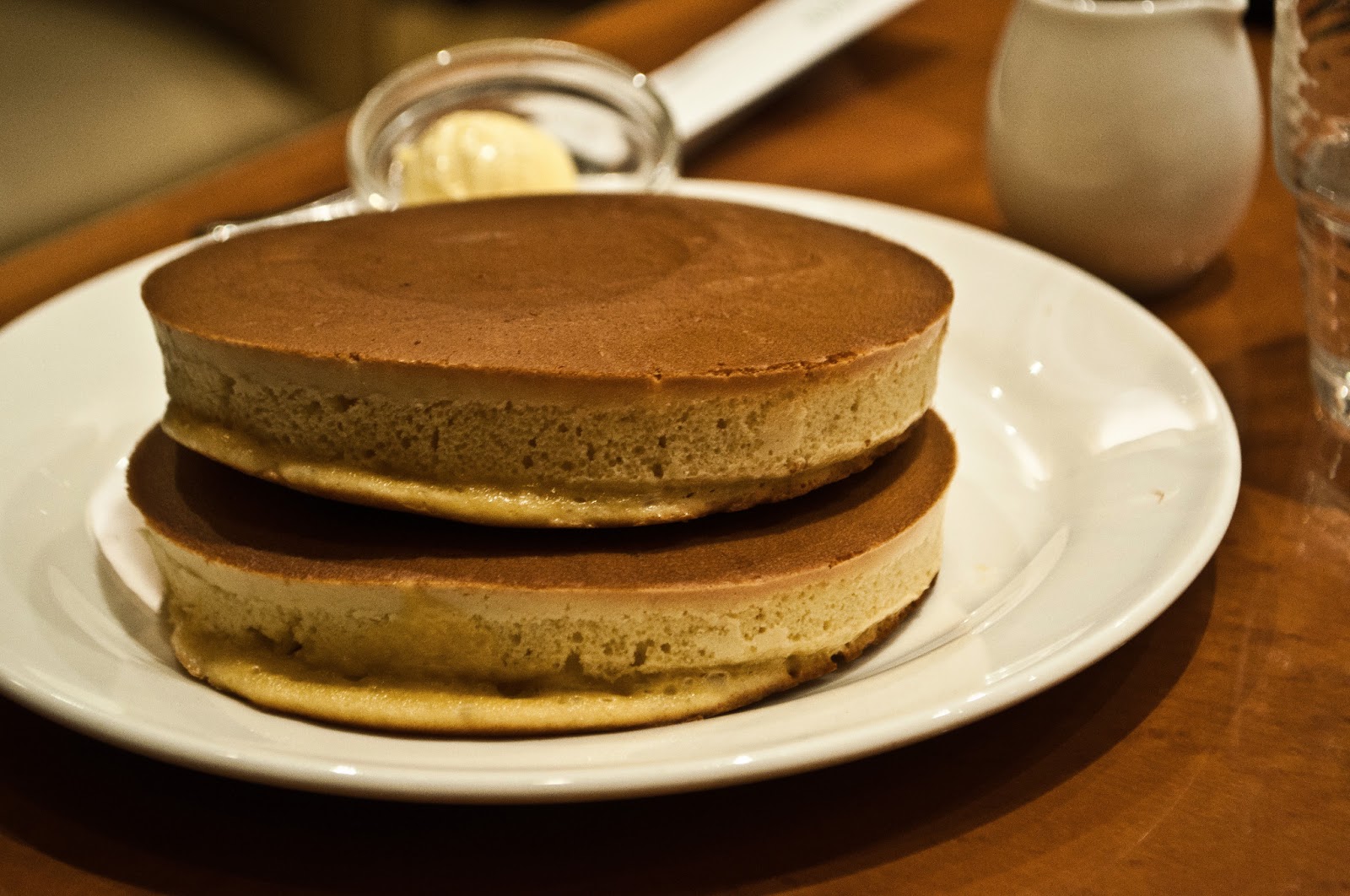
And afterwards, nothing beats an early morning cup of coffee and some fat pancakes at a nearby cafe.  


Pin It!

Tuesday, March 12, 2013

Kawagoe


We live in Saitama Prefecture.  One of the best ways I can described the “image” of Saitama is by saying that Saitama is the New Jersey of Japan.  As most people from the USA know, New Jersey is often looked down upon-especially by the neighboring folks in New York City.

Well, Saitama is to Tokyo what New Jersey is to New York.  Why?

I haven’t the foggiest idea. 

My Japanese friends say that Saitama has an “uncool” image.  That is about the best explanation I have been able to find.  Which isn’t really an explanation at all.

For myself, I couldn’t care less about Saitama’s alleged poor image.  I love living here.  As someone from the vastly huge country of the USA, living in a small country like Japan has been illuminating.  Living in the west of Saitama-considered to be the “countryside”-is lovely.  It only takes us an hour by train to get from our inaka (countryside) to the megalopolis of Tokyo.  This is by far one of my favorite things about living where we do.

About half way to Tokyo on our train line, there is a city called Kawagoe-sometimes called Koedo.  This name refers to Tokyo's former name-Edo.  Just north of Tokyo, Kawagoe was called Koedo-little Edo. 

Ever since moving to Japan nearly three years ago, day visits to Kawagoe have been a favorite weekend activity.  There are loads of delicious restaurants, beautiful shrines and temples, and lovely places to shop.  


Anyone looking for a break from the congestion and fast pace of Tokyo would do well to spend a day walking around Kawagoe.  I highly recommend it. 
Pin It!

Sunday, March 10, 2013

Kamakura: Day 2


After finishing our previous day of sightseeing in Kamakura soaked from an afternoon of rain, we were delighted to wake up to a sunny day.  We caught the bus from our Guest House and after having breakfast, explored the biggest and most important shrine in Kamakura: Tsurugaoka Hachiman-gū.

Tsurugaoka Hachiman-gu is a beautiful complex surrounded by trees and water.  After walking up the massive staircase, you reach the main shrine.  If you walk behind the shrine to the left side, there is a very small museum.  We paid the small fee to take a look at the few historical relics displayed.  It was well worth it. 

Purifying our hands before entering the shrine.
Pin It!