Showing posts with label Temples. Show all posts

Tuesday, April 23, 2013

Hong Kong: Man Mo Temple and Easter Sunday


We happened to be in Hong Kong during Holy Week.  After joining a friend for Easter mass and brunch afterward, we hopped on the tram and took it back downtown.


We spent the afternoon exploring more of Hong Kong Island.  To start, we made our way towards Man Mo Temple. 


I had never seen a temple like this one before.  The ceiling was entirely covered by enormous incense coils-all of which were burning.  There were signs advising wariness of these coils, as not all of them had trays suspended above them to catch the ashes.  The floor was covered with the ashes of the spent incense. 


The décor inside the temple was quite dark and mostly red and gold-similar to Po Lin Monastery.  This particular temple is dedicated to two gods-Man (God of Literature) and Mo (God of War).    There is a rich history surrounding the temple.  A large sign outside the temple summarized how instrumental Man Mo Temple has been in creating schools and supporting education in Hong Kong. 

When we had finished, we consulted our maps and noticed that the street of antiques was nearby. 

How could we resist?

Pin It!

Tuesday, April 16, 2013

Hong Kong: Wong Tai Sin Temple


After stuffing ourselves to the brim with delicious Thai food, we shook off the food coma best we could and trekked back over to Kowloon.
 
Back in Kowloon, we pulled out our trusty walk tour pamphlet that we had picked up in the airport.  Armed with our maps and sense of adventure, we easily found our way to Wong Tai Sin Temple.

Having lived and traveled throughout Asia for close to three years now, I have seen quite a large variety of temples and shrines.   Of all that I have seen, this one ranked highly.  It was full of rich history and colorful beauty. 

The temple complex was large.  Right in front of the temple was a set of large bronze statues of the animals of the Chinese zodiac.  To the right of the main temple were several other statues, fountains and shrines dedicated to various deities.  Behind the temple is the Good Wish Garden-a garden filled with ponds, streams waterfalls and flowers.


It was lovely. 

Checking our tour book again, we hopped over to the neighboring metro station and discovered another beautiful garden.  

Pin It!

Friday, March 15, 2013

Senso Ji Temple and Asakusa Shrine


If you are coming to Japan for a trip and plan on spending some time in Tokyo, chances are you will find your way to this temple and shrine.

Detail on the side of the Senso Ji.  In case you are wondering, here is a good explanation of the swastika.
Asakusa district is one of the biggest tourist areas in Tokyo.  It is surrounded by outdoors malls full of tourist shops all full of the same souvenirs.  There are also a few nearby shrines, plenty of good restaurants, karaoke bars and even a small amusement park.  

Souvenir shops are still closed in the early morning.
I have been to visit Asakusa Shrine and Sensoji Temple many times during my time living in Japan.  But by far, the best time was this last January.

Tokyo is the biggest city in the world based on population.  This teeming megalopolis is home to 13,000,000 people.  It gets crowded.  Add a bunch of commuters, visitors, and tourists and the result is city crowded enough to drive anyone crazy. 

Because of the major crowds, I suggest you visit popular temples and shrines as early as possible-as soon as they open is desirable.  Dragging yourself out of bed on a chilly morning might be difficult, but the crisp cool air, quiet, and lack of bustling crowds make it worth the annoyance a thousand times over.  

The entrance to Senso Ji early in the morning.  By mid morning, it is packed with people.

The first several times I visited Sensoji Temple, we came mid-day.  It was insane every time.  So crowded you could not move individually-you became a part of a crowd that had to move in unison.  Not for the claustrophobic.  When we went this year to get our omikuji-this year’s fortune-we woke up very early and walked the few blocks from the youth hostel at which we were staying.  We were at the temple at about six am. 


It was stunningly quiet and serene in the light of dawn.  The only thing to be heard was the Buddhist monks chanting from within the temple.  

The temple all decorated for the new year.

Definitely worth the early start. 

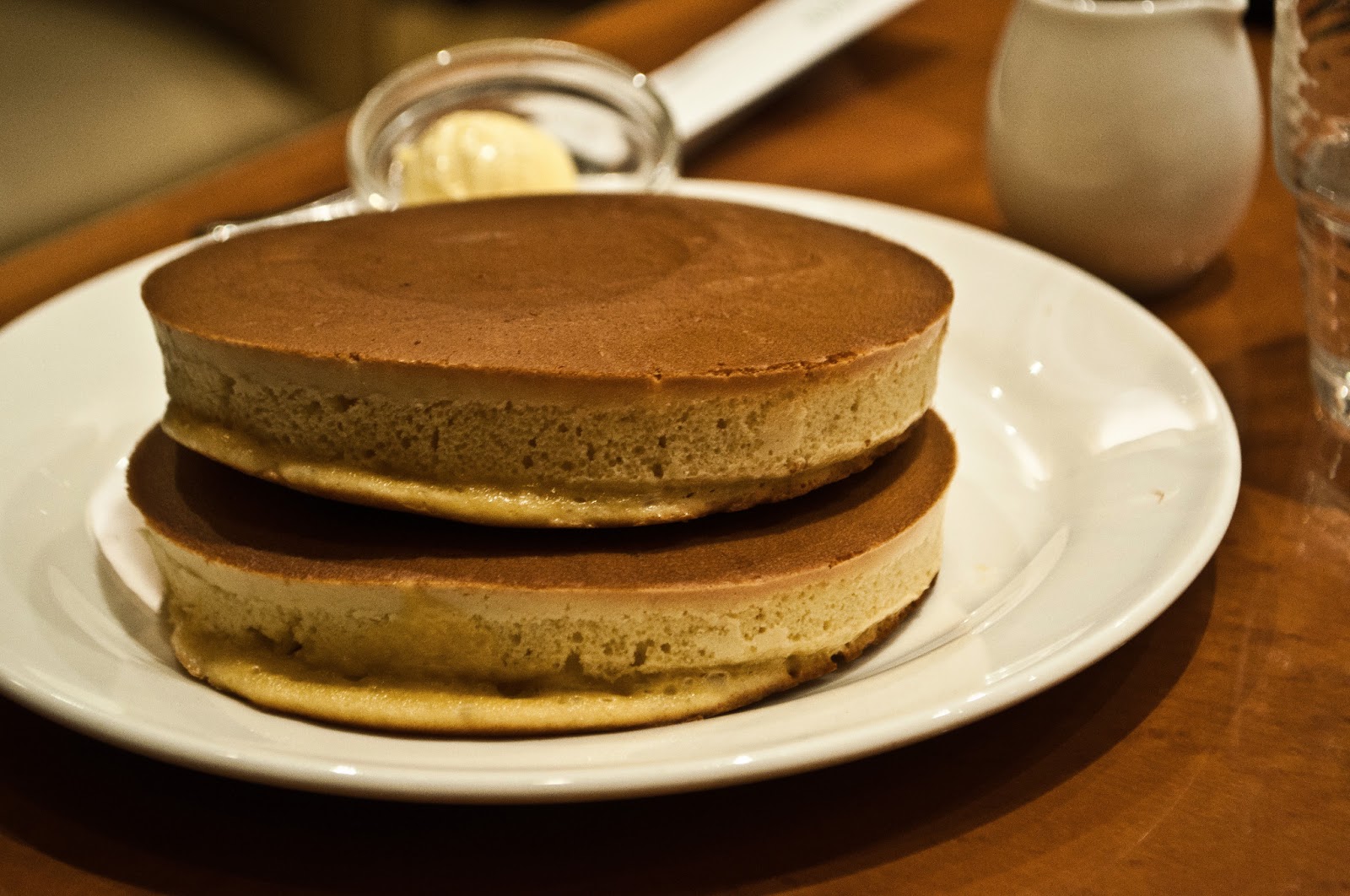
And afterwards, nothing beats an early morning cup of coffee and some fat pancakes at a nearby cafe.  


Pin It!

Tuesday, March 12, 2013

Kawagoe


We live in Saitama Prefecture.  One of the best ways I can described the “image” of Saitama is by saying that Saitama is the New Jersey of Japan.  As most people from the USA know, New Jersey is often looked down upon-especially by the neighboring folks in New York City.

Well, Saitama is to Tokyo what New Jersey is to New York.  Why?

I haven’t the foggiest idea. 

My Japanese friends say that Saitama has an “uncool” image.  That is about the best explanation I have been able to find.  Which isn’t really an explanation at all.

For myself, I couldn’t care less about Saitama’s alleged poor image.  I love living here.  As someone from the vastly huge country of the USA, living in a small country like Japan has been illuminating.  Living in the west of Saitama-considered to be the “countryside”-is lovely.  It only takes us an hour by train to get from our inaka (countryside) to the megalopolis of Tokyo.  This is by far one of my favorite things about living where we do.

About half way to Tokyo on our train line, there is a city called Kawagoe-sometimes called Koedo.  This name refers to Tokyo's former name-Edo.  Just north of Tokyo, Kawagoe was called Koedo-little Edo. 

Ever since moving to Japan nearly three years ago, day visits to Kawagoe have been a favorite weekend activity.  There are loads of delicious restaurants, beautiful shrines and temples, and lovely places to shop.  


Anyone looking for a break from the congestion and fast pace of Tokyo would do well to spend a day walking around Kawagoe.  I highly recommend it. 
Pin It!

Monday, March 11, 2013

Year of the Snake


This is the year of the snake.  People write wishes on the back of these wooden cards and hang them at shrines.
New Year’s Day is a big deal in Japan.  Many people say that Christmas is the “biggest” holiday in the USA-New Year’s Day is by far the biggest holiday in Japan. 

Similar to the Christmas cards with which many of you are familiar, most Japanese families send out New Year’s cards to their friends and family.  These cards arrive on January 1st.

The Japanese people are known for being extremely hard working and diligent as a people.  Many of the stereotypical Japanese “salary men” work and commute obscene hours six days a week.  New Year’s Day is one of the few days during the year that is a true holiday for almost everyone. 

To celebrate the new year, families gather together and visit shrines and temples.  They pray for health and prosperity and collect their fortune for the year.  Everyone is only allowed one fortune per year.  The fortunes range from the worst (daikyou) to the best (daikichi).  

In line waiting on New Year's Day.  Kawagoe, Saitama.
Kawagoe, Saitama
To collect your fortune, you pay the one hundred yen fee.  You then pick up a cylindrical container that is completely sealed shut save for one small hole at one end.  Inside the container are hundreds of long wooden rods with a number at one end.  After shaking the cylinder around and praying for a good fortune, the slip one wooden rod out to see the number.  The number corresponds with a set of drawers that contain the fortunes.  After finding the correct drawer, you open it up and take out your fortune.  If it is good, you keep it with you.  If not, you fold it over several times and tie it on a rack in the shrine to leave it for the gods. Here is a great blog post I found that illustrates this process with photos.

Karl with his Daikichi fortune.
My three years in Japan have yielded only bad fortunes.  Though my husband has always received the best fortunes.  Our Japanese friends tell us that this creates the perfect balance in our relationship. 

Let’s hope they are right!


Pin It!

Wednesday, February 13, 2013

Hasedera


After admiring the Diabutsu for a period of time, we pulled out the map our youth hostel had provided.  When we had identified the closest recommended temple for sightseeing, we mounted our rented bicycles and were on our way.   


Hasedera stands out in my mind as one of the more beautiful temple complexes I have visited in Japan thus far.  Nestled on the side of a hill, you must climb several flights of stairs to reach the temple itself.  On the way to the main temple, there are many other lovely things to catch your eye. 


We thoroughly explored the whole complex.  The last area we saw were the underground tunnels.  Hunched over, we made our way through the dimly lit tunnels, admiring the plethora of little Buddha images.  When we emerged from the caves, it had started to rain. 


Hoping the weather would change it’s mind and stop raining, we checked the map again and continued on to our next destination. 


Pin It!

Tuesday, October 23, 2012

Koya San


The Obon Holidays in Japan are for remembering the deceased.  During these few days every August, people return to their childhood homes.  The spend time with their family and honor their deceased loved ones.  Candles are lit.  Incense is burned.  Flowers are placed on graves. 

Fortunately for us, we were in Wakayama during Obon and relatively close to a famous mountain.  This mountains name is Koya San.  Koya San boasts having the largest-and one of the most beautiful-cemeteries in Japan.  There are also countless temples, many at which you can stay the night.  Unfortunately this time, we were unable to stay over.  Though we were able to see the special Obon event. 

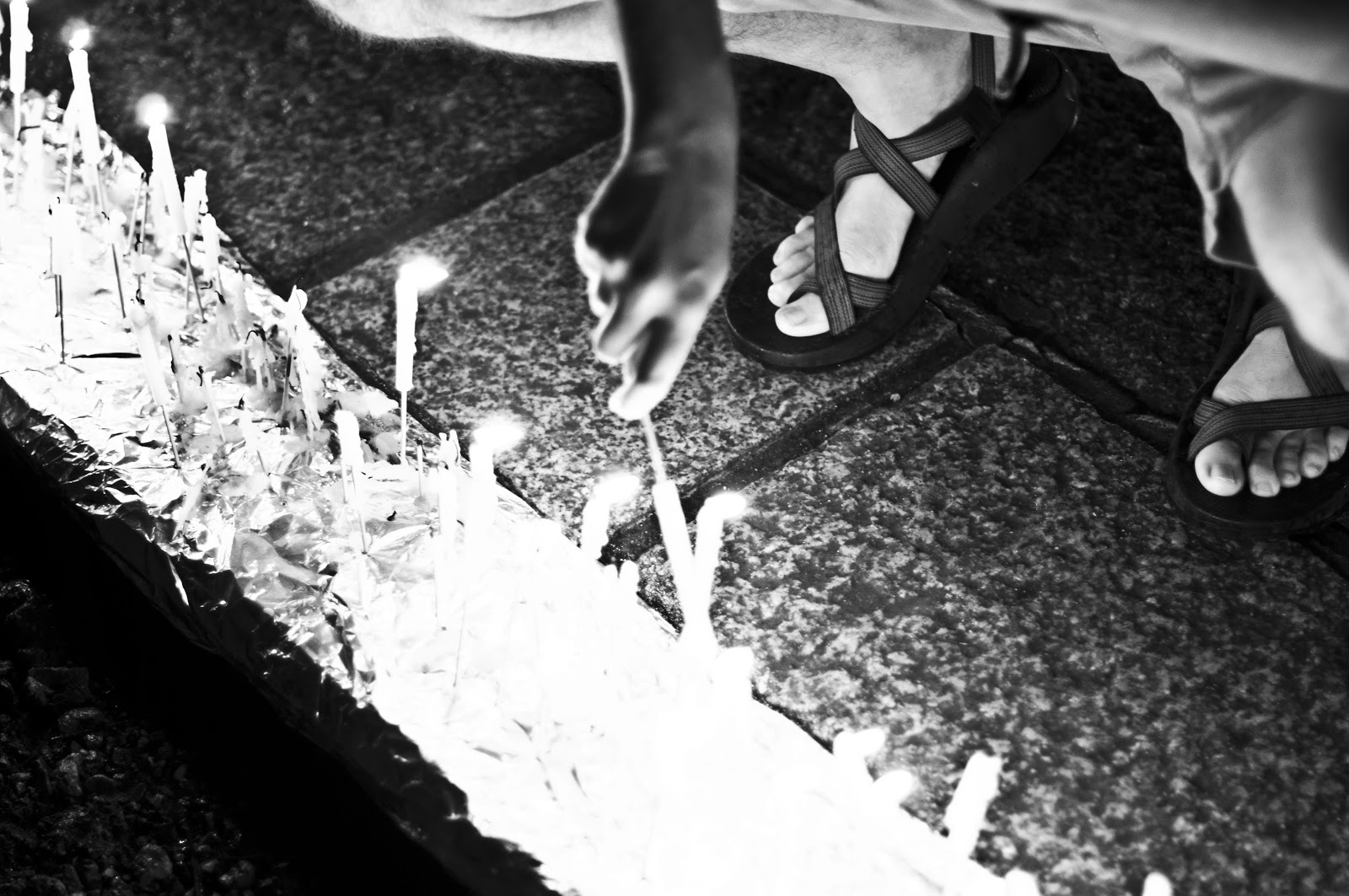
The pathway through the Okunoin cemetery was lit on both sides with stone lanterns.  Every entering the cemetery was given a handful of small candles to stick along the ground to light the pathway.  It was beautiful.

  
The monk who first settled on Koya San in the year 819 was named Kukai.  The monks hold the belief that he never actually died, but rather entered into a continuously in a state of meditation.  His body is at the Okunoin Temple, which can be reached after walking through the cemetery.  

Sadly, we only had a few hours visiting Koya San.  I am hoping to make it back again before our time in Japan ends.  
Pin It!