Showing posts with label visitors to Japan. Show all posts

Friday, March 15, 2013

Senso Ji Temple and Asakusa Shrine


If you are coming to Japan for a trip and plan on spending some time in Tokyo, chances are you will find your way to this temple and shrine.

Detail on the side of the Senso Ji.  In case you are wondering, here is a good explanation of the swastika.
Asakusa district is one of the biggest tourist areas in Tokyo.  It is surrounded by outdoors malls full of tourist shops all full of the same souvenirs.  There are also a few nearby shrines, plenty of good restaurants, karaoke bars and even a small amusement park.  

Souvenir shops are still closed in the early morning.
I have been to visit Asakusa Shrine and Sensoji Temple many times during my time living in Japan.  But by far, the best time was this last January.

Tokyo is the biggest city in the world based on population.  This teeming megalopolis is home to 13,000,000 people.  It gets crowded.  Add a bunch of commuters, visitors, and tourists and the result is city crowded enough to drive anyone crazy. 

Because of the major crowds, I suggest you visit popular temples and shrines as early as possible-as soon as they open is desirable.  Dragging yourself out of bed on a chilly morning might be difficult, but the crisp cool air, quiet, and lack of bustling crowds make it worth the annoyance a thousand times over.  

The entrance to Senso Ji early in the morning.  By mid morning, it is packed with people.

The first several times I visited Sensoji Temple, we came mid-day.  It was insane every time.  So crowded you could not move individually-you became a part of a crowd that had to move in unison.  Not for the claustrophobic.  When we went this year to get our omikuji-this year’s fortune-we woke up very early and walked the few blocks from the youth hostel at which we were staying.  We were at the temple at about six am. 


It was stunningly quiet and serene in the light of dawn.  The only thing to be heard was the Buddhist monks chanting from within the temple.  

The temple all decorated for the new year.

Definitely worth the early start. 

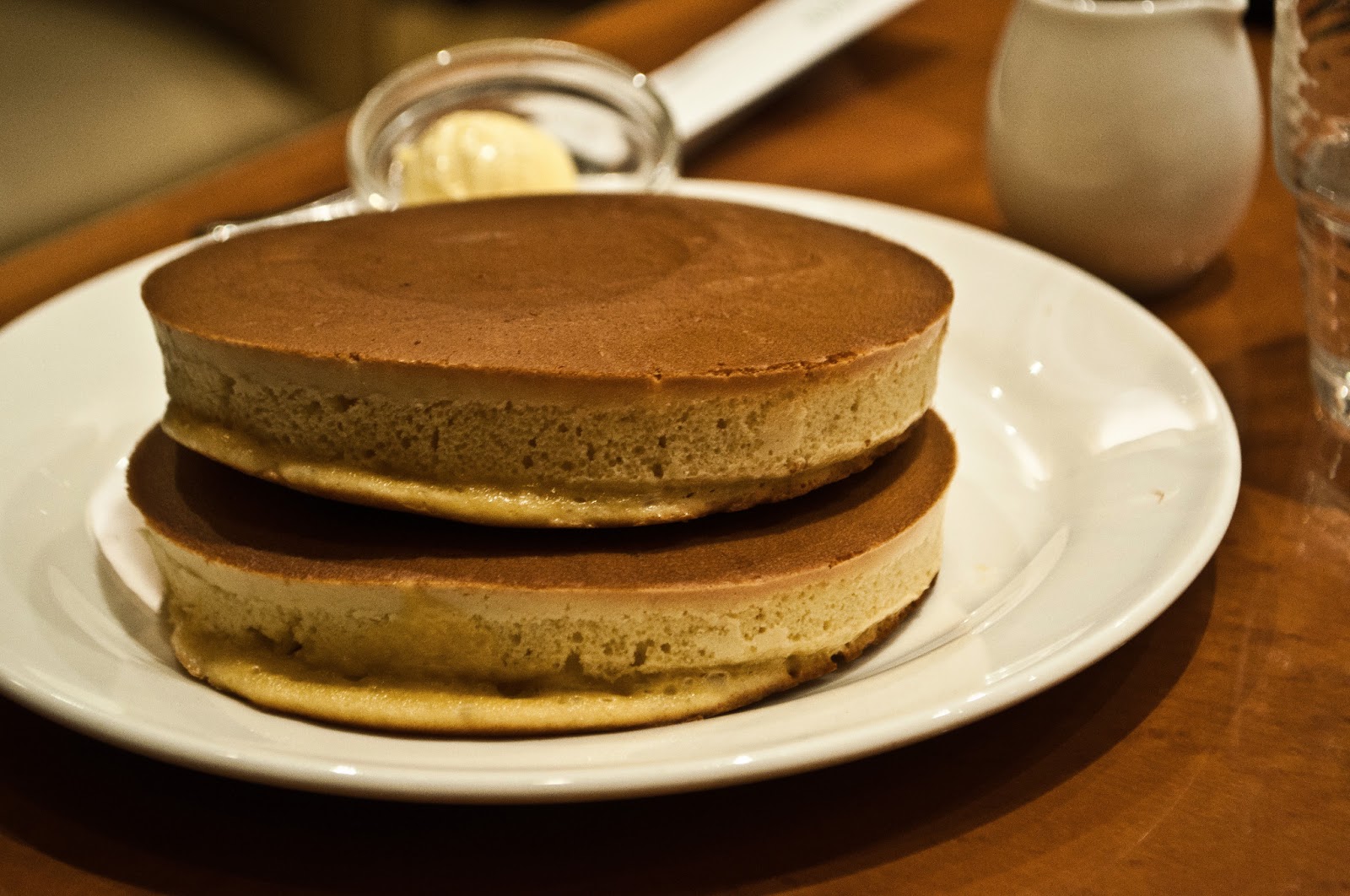
And afterwards, nothing beats an early morning cup of coffee and some fat pancakes at a nearby cafe.  

Pin It!

Thursday, March 14, 2013

Japan Travel Tips


K's House Ito Onsen-a fabulous traditional ryokan for a great price.
When I was a kid, I had a paper route.  I walked those Wisconsin neighborhoods everyday but Sunday for about four years.  It wasn’t fun much of the time, but it was a great job for my child self.  One thing I usually hated was getting up at five am on Saturday to get the paper delivered by seven. There were times, though, that I did not mind the early morning walk.  Especially when I discovered (nerd alert) a great radio show on NPR called The Savvy Traveler.

As I walked my paper route, I would listen to people’s incredible stories from all over the world and imagine myself to be there: sipping a cappuccino on a tiny street café in Verona, riding a zip-line through the jungles in Costa Rica, hiking the Great Wall of China. 

Perhaps the seed was planted then.  The seed which sprouted into a great desire to travel everywhere, experience everything, and meet everyone.  I have been fortunate enough to nurture this desire and gain many experiences, though they are few compared to others.   

As someone who has lived, traveled, and worked in Japan for a few years now, I feel obligated to do my part in sharing things I have learned.  I’ve learned an incredible amount during my time here.  One such thing is how to travel. 

I’d been on a few major trips before moving to Japan, but these trips (one to China and one to Europe) were more or less group tours.  Not to knock group tours-they certainly have their own draw.  My point is that group tours are a certain type of travel.  Traveling solo, or without a guide is a totally different story. 

There are so many factors that go into planning major trips on one’s own.  First you have to decide what type of trip you want/can afford.  Japan is known to be an expensive country.  It’s expensive to get here, live here, and get around here.  (Though the exchange rate is now beginning to even out between the Yen and USD…which is bad for us, but great for anyone coming to Japan to travel.)

There are many things I could talk about or suggest for people who have a desire to visit Japan, but I only want to mention two here:

1)    Buy a Japan rail pass.  This is by far the most cost effective way to get around Japan.  You have to buy them outside of Japan though.  Find more information here.
2)    Don’t stay in hotels; Japan does the backpacker’s hostel very well.  I want to  specifically recommend K’s House.  They have eight locations across Japan and they are staffed by some of the nicest people I have ever met.  Also, the facilities are extremely nice and very clean.  They offer private rooms as well as the cheaper dorm rooms.

K's House Ito Onsen-street side.

These two things alone will help in planning a fantastic trip through Japan!  Happy traveling, everyone!

Side note: Unfortunately, The Savvy Traveler was taken off the air several years ago due to lack of listener donation during pledge drives.  Sigh. 

Anyone know of any great travel podcasts? 


Pin It!

Monday, March 11, 2013

Year of the Snake


This is the year of the snake.  People write wishes on the back of these wooden cards and hang them at shrines.
New Year’s Day is a big deal in Japan.  Many people say that Christmas is the “biggest” holiday in the USA-New Year’s Day is by far the biggest holiday in Japan. 

Similar to the Christmas cards with which many of you are familiar, most Japanese families send out New Year’s cards to their friends and family.  These cards arrive on January 1st.

The Japanese people are known for being extremely hard working and diligent as a people.  Many of the stereotypical Japanese “salary men” work and commute obscene hours six days a week.  New Year’s Day is one of the few days during the year that is a true holiday for almost everyone. 

To celebrate the new year, families gather together and visit shrines and temples.  They pray for health and prosperity and collect their fortune for the year.  Everyone is only allowed one fortune per year.  The fortunes range from the worst (daikyou) to the best (daikichi).  

In line waiting on New Year's Day.  Kawagoe, Saitama.
Kawagoe, Saitama
To collect your fortune, you pay the one hundred yen fee.  You then pick up a cylindrical container that is completely sealed shut save for one small hole at one end.  Inside the container are hundreds of long wooden rods with a number at one end.  After shaking the cylinder around and praying for a good fortune, the slip one wooden rod out to see the number.  The number corresponds with a set of drawers that contain the fortunes.  After finding the correct drawer, you open it up and take out your fortune.  If it is good, you keep it with you.  If not, you fold it over several times and tie it on a rack in the shrine to leave it for the gods. Here is a great blog post I found that illustrates this process with photos.

Karl with his Daikichi fortune.
My three years in Japan have yielded only bad fortunes.  Though my husband has always received the best fortunes.  Our Japanese friends tell us that this creates the perfect balance in our relationship. 

Let’s hope they are right!


Pin It!

Wednesday, February 13, 2013

Hasedera


After admiring the Diabutsu for a period of time, we pulled out the map our youth hostel had provided.  When we had identified the closest recommended temple for sightseeing, we mounted our rented bicycles and were on our way.   


Hasedera stands out in my mind as one of the more beautiful temple complexes I have visited in Japan thus far.  Nestled on the side of a hill, you must climb several flights of stairs to reach the temple itself.  On the way to the main temple, there are many other lovely things to catch your eye. 


We thoroughly explored the whole complex.  The last area we saw were the underground tunnels.  Hunched over, we made our way through the dimly lit tunnels, admiring the plethora of little Buddha images.  When we emerged from the caves, it had started to rain. 


Hoping the weather would change it’s mind and stop raining, we checked the map again and continued on to our next destination. 


Pin It!

Thursday, January 31, 2013

Kamakura Diabutsu


Japan is a small country, it’s true.  Despite this, the land of the rising sun offers a seemingly unlimited amount of interesting things to capture the attention of visitors.  Living so close to Tokyo, we can always find something to spark our interest and prompt us to explore. 

One of the places we had been meaning to get too for a while was Kamakura.  Just south of Tokyo, it only takes about two hours to get there from west Saitama.  It is a popular day trip outside of Tokyo for visitors to Japan.

The most famous attraction of Kamakura is the enormous Buddha statue-the Daibutsa (big Buddha).  It was built around nearly 800 years ago and has withstood multiple natural and human made disasters including a tsunami (which swept away it’s original building enclosure), earth quakes, and a many wars.


The Buddha sits on its reconstructed plinth, raising it several feet off the ground.  The impressive size is emphasized through the solemn meditative expression of the Diabutsu.  It is truly a magnificent image to behold.    


For a very small fee, we were able to go up inside the Buddha.  This offered a fascinating glimpse into how it was constructed. 

 More on Kamakura coming soon!


Pin It!

Thursday, January 10, 2013

Sumo


If you ever find yourself in Japan, I have one piece of advice for you (well, several, actually…but I’ll address those later):

Go to see a sumo tournament live.


A few months ago I had to plead total ignorance regarding sumo.  Big fat guys who “wrestle”…right?

Well, I still don’t know too much about it, but I know more now than I did then.  A few times a year, sumo tournaments are held.  We were fortunate enough to be able to attend the September tournament last year in Tokyo. 

It was fascinating.  

Processing in for the beginning ceremony.

 Two wrestles face each other in the ring.  There are two ways to win a round:  Push your opponent outside of the ring, or knock your opponent down. 

A close call...
The judges discussing the decision.
A round begins when the two wrestles throw salt in the ring to protect themselves from injury.  They squat, opposite each other.  A referee stands between the wrestles, just inside the ring.  When both wrestles are ready, they lean forward and put their fists to the ground.  This can take a long while to lead up too-most wrestlers use the entire four minute limit allowed.  From what I could gather, the suspense leading up to the actual wrestling was just as important and the wrestling itself.  

If you are really interested in sumo, check out this website.  


Pin It!

Thursday, October 25, 2012

Fushimi Inari Jinja


Sometimes I ashamedly reflect back onto what little I knew of Japan before moving here two years ago.  At that time my knowledge of Japan was something like this:

Sushi-Raw fish.  Totally un-appealing. (Now I love it.)

Geisha-Cans of pineapple…?  Fancy ladies with white faces?  (Just read this book-fantastic.)

Sumo-Really, really fat wrestlers. (Recently went to the Tokyo tournament-amazing!)

Ninjas-Stealthy dudes all dressed in black. (Still don't know much about them...)

Godzilla-Huge green lizard that terrorizes Tokyo. 

Anime-Really strange cartoons. (I LOVE studio Ghibli films!)

And so on. 

Fortunately, I have now learned a tremendous amount about Japan.  (In fact, I strongly believe now that living abroad is one of the best things one can do.  There are few experiences in life that are as challenging and rewarding.)

Some of the only images in my mind of Japan and its culture came from the movies.  Most recently, The Memoirs of a Geisha. 

During our time studying at Yamasa this past August, we took a few trips to Kyoto during the weekend.  One of the most iconic images of Japan-that I knew of because of The Memoirs of a Geisha-is located at the Fushimi Inari Jinja (a “Jinja” is a Japanese Shinto Shrine).  


The iconic image associated with this film happens when the main character (as a child) runs through the forest of torii to the reach the shrine where she makes an offering and prays.  This now famous scene was shot on location in Kyoto at the Fushimi Inari Jinja. 


I had been hoping to visit this shrine for some time and was delighted when the trip was scheduled.   

Lantern and gateway at the entrance of the shrine.
The main shrine building
The Shinto Inari god (Kami in Japanese) is the deity of good fortune and rice.  At every shrine dedicated to the Inari god, you will find images of foxes.  The fox-the messenger of this god-plays a significant role in the stories surrounding the Inari god. 

A fox at the entrance of the shrine.
Wooden foxes people can purchase, draw on a face, write a petition and leave at the shrine.
It is believed by those who practice Shintoism that making offerings to the Inari shrines is important to their success in business.  The number of torii at Fushimi Inari Jinja is directly related to this.  The large torii are purchased-usually by companies-as an offering and petition for continuous good fortune.  The big torii are extremely expensive. 

A map of the whole complex.
A sign depicting the prices of the torii.  The most expensive one, with the current exchange rate, is over $16,000.00 USD.

Regular folk can buy their own (much smaller) torii for their petitions.  


Unfortunately, we did not have time to make the entire walk through the torii forest.  This turned out to be a good thing… As we were walking back through the torii, thunder began to rumble in the distance.  Just as we reached the parking lot, it began to pour.

The thunder rolling in...

Visiting Fushimi Inari Jinja was one of the highlights of my summer.  If you ever visit Kyoto, it should be on the top of your list. 

Pin It!